Recent Posts

Table saw Rip capacity guide- What is a good rip capacity?


What is good Rip Capacity Of A Table Saw

When it comes to woodworking, a table saw is often the heart of the operation. Whether you’re a seasoned pro or just starting out, you’ve likely heard the term “rip capacity” thrown around. But what exactly is rip capacity, and why does it matter?

In this blog post, we’ll answer essential questions and help you grasp the importance of rip capacity in your woodworking endeavors.

What Is Rip Capacity?

What Is Rip Capacity?

Rip capacity is a term that describes the maximum width of material you can safely cut on a table saw.

In other words, it’s the distance between the saw blade and the fence on the right side of the blade. This measurement is crucial because it determines the size of the stock you can work with.

Let’s break it down with an example. If your table saw has a rip capacity of 24 inches, it means you can make a straight cut through a piece of wood that is up to 24 inches wide.

Trying to cut anything wider than that would not only be risky but could damage your saw or result in an uneven, unsafe cut.

1. Why Does Rip Capacity Matter?

Now that we know what rip capacity is, let’s dive into why it’s so important.

1. Safety First

Safety should always be your top priority in woodworking. Using a table saw with a rip capacity that matches your project’s needs ensures that you can make accurate cuts without compromising safety. Attempting to cut materials wider than your saw’s capacity can lead to kickback, where the wood is violently thrown back towards you, posing a significant danger. It’s a situation you definitely want to avoid.

2. Versatility and Efficiency

Imagine you’re working on a project that requires you to cut a wide sheet of plywood for a cabinet back. If your table saw has a limited rip capacity, you’d have to resort to other, potentially less precise methods, like using a circular saw or a track saw. This not only reduces the accuracy of your work but also increases the time and effort required.

With a table saw boasting a generous rip capacity, you can tackle a broader range of projects efficiently and with greater precision. It becomes a versatile tool in your workshop, capable of handling a variety of tasks, from ripping long boards to cutting sheet goods.

2. How to Determine the Right Rip Capacity for You

So, how do you figure out the ideal rip capacity for your needs? Here are some steps to help you make an informed decision:

  • Assess Your Projects: Consider the types of projects you frequently work on and the sizes of materials you typically use. Your rip capacity should comfortably accommodate the widest pieces you commonly encounter.
  • Plan for Growth: If you’re an aspiring woodworker or foresee tackling larger projects in the future, it’s wise to invest in a table saw with a generous rip capacity from the get-go. This ensures you won’t outgrow your tool too quickly.
  • Check the Market: Table saws come in various sizes and price ranges. Research the options available in your budget and read reviews to find a saw that suits your specific needs.
  1. Consider Aftermarket Upgrades: In some cases, you can extend the rip capacity of your table saw by purchasing aftermarket accessories or by building custom extensions. This can be a cost-effective solution if you already own a table saw with a smaller capacity.

3. Can I Increase the Rip Capacity of My Existing Table Saw?

Yes, you can often increase the rip capacity of your existing table saw through a few methods:

  • Aftermarket Accessories: Many manufacturers offer extension wings or fences that can be added to your existing table saw. These extensions can significantly increase your saw’s rip capacity and versatility.
  • Build Custom Extensions: For a more budget-friendly approach, you can build custom extensions using plywood or other suitable materials. Just make sure they are level and securely attached to maintain safety and accuracy.

Before attempting any modifications, consult your table saw’s manual, and consider seeking advice from experienced woodworkers or professionals to ensure safety and precision.

4. What Is the Difference Between Rip Capacity and Crosscut Capacity?

Rip capacity and crosscut capacity are both essential measurements for understanding a table saw’s capabilities, but they refer to different aspects of cutting:

  • Crosscut Capacity: Crosscut capacity, on the other hand, refers to the width of material you can cut perpendicular to the grain of the wood. This measurement is determined by the size of the miter gauge or the distance between the blade and any crosscut sled or accessory you use.

5. What Are Some Safety Tips When Using a Table Saw with a High Rip Capacity?

Safety is paramount when working with any power tool, especially one with a high rip capacity. Here are some essential safety tips to keep in mind:

  • Always Wear Safety Gear: This includes safety glasses or goggles, hearing protection, and appropriate clothing. Additionally, consider using a dust mask or respirator to protect against dust and debris.
  • Keep Your Work Area Clean: A clutter-free workspace reduces the risk of accidents. Ensure there are no obstructions near the saw, and clear away wood scraps and tools that you’re not using.
  • Use a Push Stick: When making narrow cuts, use a push stick to guide the wood through the blade. This keeps your hands safely away from the blade and prevents kickback.
  • Maintain Proper Blade Height: Adjust the blade height so it’s only slightly higher than the thickness of the material you’re cutting. This minimizes the exposed blade and reduces the chance of accidents.
  • Use a Rip Fence: A rip fence is your best friend when making long rip cuts. Ensure it’s aligned correctly and securely locked in place to maintain a straight cut.
  • Avoid Overloading the Saw: Don’t push the saw beyond its capabilities. If you’re working with large or heavy materials, get assistance or use additional support to prevent strain on the saw and reduce the risk of accidents.
  • Stay Focused: Woodworking requires your full attention. Avoid distractions, and never rush through a cut. Take your time to ensure accuracy and safety.

6. Are There Any Limitations to Consider with a Table Saw’s Rip Capacity?

Yes, there are a few limitations to keep in mind:

  • Cut Quality: While a table saw with a high rip capacity can handle wide cuts, the quality of those cuts can be affected by the type of blade you use, the saw’s power, and the stability of your setup. Investing in a quality blade and ensuring your saw is properly maintained will help maintain cut quality.
  • Space Requirements: A table saw with a large rip capacity can take up a significant amount of space in your workshop. Ensure you have adequate room for both the saw and the materials you’ll be working with.
  • Portability: Large table saws with high rip capacities can be heavy and challenging to move around. If you need to transport your saw frequently, consider a portable model with a smaller rip capacity.
  • Budget: Table saws with larger rip capacities tend to be more expensive. Make sure your budget aligns with your needs and the type of projects you plan to undertake.

8. Do Different Types of Table Saws Have Different Rip Capacities?

Yes, different types of table saws can have varying rip capacities, and the type of table saw you choose should align with your specific needs:

  • Contractor Table Saws: These are typically portable and have a moderate rip capacity suitable for a wide range of tasks, including general woodworking and construction projects. Rip capacity can vary but often falls in the 24-36 inch range.
  • Cabinet Table Saws: Cabinet table saws are larger and more powerful, making them suitable for professional woodworkers and demanding projects. They often have larger rip capacities, frequently ranging from 36 to 52 inches or more.
  • Compact Table Saws: These smaller table saws are designed for DIY enthusiasts with limited space. They have more modest rip capacities, usually around 18-24 inches.
  • Hybrid Table Saws: Hybrid table saws bridge the gap between contractor and cabinet saws. They offer a good balance of power and portability and typically have rip capacities ranging from 30 to 40 inches.

9. Benefits of a Sliding Table Saw Regarding Rip Capacity?

A sliding table saw is a type of table saw known for its exceptional rip capacity and versatility. Here are some key benefits:

  • Precision and Safety: The sliding table ensures accurate and controlled cuts, reducing the risk of kickback or misalignment common with standard rip fences. This precision is crucial for fine woodworking and cabinetry.
  • Crosscut Capabilities: Sliding table saws are equally adept at crosscutting, making them versatile for various woodworking tasks. The sliding table allows you to make precise perpendicular cuts with ease.
  • Efficiency: With a sliding table saw, you can make longer, continuous cuts without having to reposition your workpiece constantly. This streamlines the cutting process and enhances efficiency.

However, it’s important to note that sliding table saws are often larger, heavier, and more expensive than standard table saws, making them better suited for professional woodworkers or dedicated hobbyists with the space and budget for such equipment.

10. Can I Use a Table Saw with a Limited Rip Capacity for Larger Projects?

While it’s possible to use a table saw with a limited rip capacity for larger projects, it may come with certain challenges:

  • Multiple Passes: If your table saw’s rip capacity is too small for the material you’re working with, you may need to make multiple passes to achieve the desired width. This can be time-consuming and may result in less precise cuts.
  • Increased Risk: Making multiple passes or using unconventional methods to cut wider materials can increase the risk of accidents and kickback. It’s essential to exercise extreme caution in these situations and use appropriate safety measures.
  • Accuracy Concerns: Achieving precise, straight cuts on larger materials with a limited rip capacity can be challenging. You might need to invest in additional tools like a straightedge guide or track saw to ensure accuracy.

(Reasons) Why Balsa Wood Is Not Strong? [2024 Updated!]


Is Balsa Wood Strong

So here is the deal. Balsa wood is classified as hardwood but its physical strength is questionable in regards to when thinking of it as strong as other hardwoods. 

But it’s still a kind of hardwood, though, shouldn’t it be sturdy? If not then why? 

Why balsa wood is not strong?

In a word- NO. Balsa wood is not strong. It’s kind of hardwood yet one of the least dense wood you can find on earth. The reason here for this is because their trees naturally grow faster, and thus have less density which makes them weaker than many softwoods, such as pinewood.

If you still wondering to know more about it, sure we’ve more information for you.

Scroll down to look at the properties first.

Balsa wood properties

Let’s start with the properties of this wood. 

It has the following properties.

[table id=14 /]

Is Balsa a Strong wood?

In a word- NO. Balsa wood is not strong. It’s kind of hardwood yet one of the least dense wood you can find on earth. 

Although, generally hardwoods like oak wood tend to be heavyweight and denser which makes them ideal for crafting a set of furniture.

But that’s not the case with Balsa wood. Even if its genesis comes from the hardwood species.

The reason for its lightweight and less dense nature is its cells, which are long, turning down the density ratio p = m / V. Its density in numbers is close to Density 160 (120-220)kgm3. Pound for pound, other hardwoods have more than that.

As you know, trees with lengthy cells grow faster, so with that said, we can say balsa wood trees grow faster under required environments.

How strong balsa wood is?

To measure the strength of wood, mainly to identify how much weight wood can hold up.

There is a tool known as the Janka hardness scale. That is used to determine the strength of lumber.

In general, the Janka Hardness test is used to determine whether hardwood flooring can be made from a particular wood species based on its hardness. 

In this experiment, a steel ball measuring 11.28 mm in diameter is formed to penetrate a piece of wood until it is half embedded.

The potential applied force is then calculated and according to that outcome- rank is given to woods.

It should be noted that in the woodworking industry, this method is considered standard for detemining the strength of wood.

Below is the chart showing you some of the weak performance wood species.

Among them, the balsa wood has taken the last slot. You can find the complete chart of the strength of different woods here. 

https://en.wikipedia.org/wiki/Janka_hardness_test

[table id=15 /]

How easy is it to break balsa wood?

Balsa wood is very easy to break apart.

Even a little force given by hand is enough to break into parts. That’s the reason it’s not a good wood for crafting any type of furniture.

But there are still questions to be asked. Are we evaluating breaking ability in terms of suddenly impacted force, or are we evaluating elasticity?

Of Balsa, the modulus of elasticity is 538,000 pounds per square inch, while of white oak, it is 1,762,000 pounds per square inch.

The numbers are indicating the required force needed to break a wood- Balsa has scored 2,840 lbf/in2 compared to white oak’s score is 14,830 lbf/in2, (Oak is one of the rough wood to break so used it for comparison)

In simple terms, if you mean test balsa breakability by applying sudden force like hitting the sheet with a hammer, sitting on a chair made of balsa ( usually no one makes this).

Then, according to the numbers we got from the Janka hardness tool, it would break apart easily.

However, when it comes to the elasticity of balsa wood. Which is actually different from strength in the woodworking world.

Why is balsa considered a hardwood, when it’s not strong?

Inf you look for the real definition of softwoods and hardwoods.

You will be surprised knowing that, it’s not about their physical nature, instead there are other factors on which basis woods have been classified.

A common property of balsa wood which classifies it as hardwood is the process of how the trees are produced- their seeds.

The seeds of balsa trees are covered in a shell which is a property of hardwoods. They are called angiosperms.

Seeds of softwoods like pine are a kind of softwood. They are not covered in a shell. They are called gymnosperms.

Balsa Wood uses: What is good for?

Though balsa wood has very specific uses, bear in mind that it isn’t sturdy or durable wood, so the uses too, do not require these properties. 

Balsa wood is good for making sculptures because it’s easy to carve, and requires minimum effort to do so.

Also, being lightweight makes ideal artwork like crafting a model of airplanes. This wood is great for artwork, no matter what you do to it.

Speaking of industry-level uses of balsa wood, for which the wood is actually popular.

Here are the following good uses of balsa wood.

  • It’s used to make In wind turbine blades.
  • It’s used for artwork, making wood models.
  • It’s used as veneers, to give natural flavors.
  • It’s used In packaging materials.
  • It’s used for insulation.
  • In Spain, It’s used as floatation devices ( in Spanish, balsa means float).
  • It’s used as stuffing for mattresses, cushions, and pillows.

Balsa wood: advantages and disadvantages

Here are some pros and cons of balsa wood.

Advantage 

  1. Model-making or curving is easy to do with this wood.
  2. Since this wood floats in the water for a long time, it is used to make fishing lures.
  3. Balsa trees grow rapidly by nature. 20 meters in 7 years.
  4. This wood is easily found in the form of sheets at reasonable prices.
  5. It is less prone to water damage than others of the same kind.

Disadvantage

  1. Not suitable for making furniture, it’s less sustainable and easily breakable.
  2. Too much water can damage the wood.
  3. Due to its lightweight and flammability, this wood burns readily when exposed to fire.
  4. It does not have any natural anti-insect ability to keep bugs away.

Can balsa be used for making furniture?

Even though it can be used for making furniture, no carpenter on earth will prefer using balsa for this purpose.

No, Furniture made out of balsa wood is not durable, cannot hold up more weight, and is easily breakable because of its lightweight nature. Neither balsa has any uses in flooring.

Saying that would not be wrong that there is no furniture made from balsa wood

Where Do Balsa Trees grow?

Tropical rainforests of Central and South America are home to balsa trees and readable trees.

And Most of the balsa wood production on earth comes from Ecuador. 

Do the trees take a long time to grow?

Actually not, when compared to other hardwoods. For a balsa tree to be capable of being used, it takes anywhere between 4 and 8 years. 

How much does balsa cost?

You might have to pay $10 per square foot for a balsa wood sheet measuring 3/16 inches thick. For increased thickness, you will have to run over more cost.   

One thing to note here, unlike other woods balsa is not available in blocks, instead, they are found in manufactured plywoods, in the shape of sheets or veneers.

Therefore, the price depends on the thickness of the plywood of balsa you will buy.

[table id=16 /]

Why do people remove riving knives?


Riving knives

The thing is that, if you have seen people on youtube using table saws without using riving knives, you might wonder for a moment that is it safe to use o safety guards? If not, why these people are doing this? 

The answer is, the people you see not using riving knives either are making dado cuts where a riving knife serves no purpose or it could be because they are shooting a youtube video and wanting to show all the steps involved to us. 

Other than these causes, it’s irresponsible not to use safety features. As TS is not something we should take easy, it’s one of the dangerous tools to use. The machine is not harmful to itself, but the person who operates it should learn how to use it before continuing to work on their own.

All I can say, you must not remove riving knives from your table saw at any cost. if you are a beginner or even expert in the industry, neither blade guard should be removed. These are the essential safety features for a table saw, miter saw, and we always suggest that safety should always come first.

So why do people remove riving knives?

Being a carpenter I have never used a saw that does not have either a splitter or a riving knife. It’s been more than 12 years since I’m using saws, neither I see any of my fellow carpenters have a saw with no safety feature. However, when it comes to youtube, I also did watch videos where speakers don’t have riving knives. 

In my opinion, all these means is:

One of the most obvious reasons why many people do this on youtube is simply because they want to show every step involved in a process in an easy-to-follow format. Riving knives when shooting a video of making cuts come in the way of the camera’s eye and make it difficult for the camera to see the steps being taken.

There is no doubt, carpenters who make videos on youtube are experts in the industry.

I can bet, they know how to handle a table saw safely even if there are no safety features installed. The reason being here is their years of experience in woodworking enables them to do so.

When Should you remove the riving knife?

It’s true driving knives are capable of handling different cuts, without needing to be removed. But, there are times when we just cannot proceed with the project in the essence of these safety features. It’s when there are dado cuts to be made.

Having said that, let’s say you have to make dado cuts. And for this, you know the normal blades wouldn’t get the job done unless you install dado blades on your saw

Changing the blade eventually will make the riving knives useless because the most common size of stacked blades is 8-inch and normally table saw blades are 10-inch in diameter. Due to this difference, a riving knife will serve no purpose at all.

Because a riving knife needs a one-inch space between a stacked dado blade to function properly.

I don’t know the exact space but I’m sure in most of the cases it will not be useful if it’s not removed, because even if it is inserted, it will not touch the cutting workpiece, so it will be pointless in preventing the kick-backs.

Since most table saws use a 10-inch diameter blade, but most stacked dado blades are 8-inches in diameter. There would be at least a one-inch gap between the edge of the stacked dado blade and the riving knife, which would essentially render the riving knife useless.

Can you use a table saw without a riving knife?

Yes, you can use it without a riving knife. A table saw is not necessary to have it installed to function properly. Unless the matter of safety comes first, in fact riving knives don’t serve any main purpose in cutting.

It happens many times when we need to see every inch being cut through with the saw blade. During those moments, riving knives literally become a blockage of our eye vision: making it hard to see what part of the workpiece and where the saw is slicing it.

But still, even though we aim to make proper cuts we cannot ignore the safety. With that said, there are alternatives to a riving knife that should be used as a blade guard or even a splitter depending on the situation.

Can you get a kickback with a riving knife?

The use of riving knives does not guarantee that you will not become injured. Not at all. Because the fact is, a table saw is always going to punish you real badly when you don’t handle it carefully. Carefully in terms of when you go off-balance with your workpiece, there is likely going to be a kick-back regardless of whatever you’ve used as a defensive tool, even a riving knife cannot help you 100% times.

Think all the safety features nothing but an added safety products, you will always get good impressions from the manufacturers who make them. In reality, a table saw is not something that cares for you. On the contrary, it punishes you severely.

This is How do you apply primer to wood?


water-based vs oil based primer

We know the importance of applying primers to a wooden surface before painting. But what’s next? How to apply a primer and who will decide whether a coat is needed or not? And what will happen when you don’t apply primer first?

Primers make a wooden piece look nice, and produce good adhesion between paint color and surface because of adhesive properties, as well using primers we require fewer coats of the applied paint color.

We need to consider the condition of the material: bare or already painted woods, differ in the number of coats. Along with that, the types of primers either latex-based or oil-based make a difference there.

Our goal in this blog post will be to cover all the instructions you need to know to achieve a perfect end result.

How do you apply primer to wood? (Steps)

Let’s take our first step with the steps to apply a primer.

The short answer is-

While priming bare wood, use a sand grit coarse to rub the surface to prepare the surface: to knock off the grains. Then, clean it up well. Apply the coat of primer and let it be cured for at least 24 hours before you either coat it prime twice or color it, ensure that if you’re using oil-based paint color the primer should be oil-based. Similarly, for latex-based paints, the primer should be latex-based. 

The number of coats depends on whether you’re priming on a block of bare wood or something which has already a layer of color. As bare wood absorbs liquid into its deep grains, more coats are usually needed on bare wood. 

That’s not the case with projects that have been painted in the past, usually priming them again is not really needed. Just use a wet rag to clean up the stains or dust.

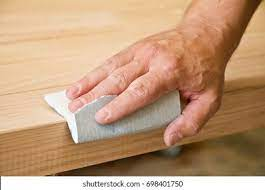
Step 1 – Sand your wooden piece

The first step is to rub your wooden piece to prepare the surface for the primer. 

Use a sand grit paper of 180 coarse which is ideal for many, that will neither sand the piece too rough nor too smooth. Rub it in the direction of wood grains, but not too rough, since it may damage the surface.

The sanding part is crucial if your project is bare wood because of the active grains. 

So sanding knocks down the grains, shapes the surface thoroughly balanced, and wood pallets that have knots like pinewood. 

Moreover, the process of sanding can minimize the knots up to a certain extent.

If your project has been painted previously. Now you want to repaint it. In that case, it isn’t always necessary to sand the surface unless you wish to remove the current paint color. 

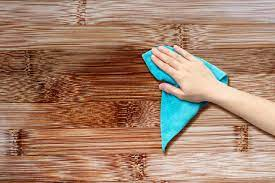
Step 2 – Clean Your Wood

After the sanding has been done, the next step is to clean the wooden piece to help the paint adhere to the surface. 

Removing dust is important if you do not want your paint color to become blotchy after a while. A hand-held vacuum or an air compressor is all that is needed to clean bare wood because there are no rough stains or something like that demands hard cleaning. 

For cleaning an already painted surface, you may need to use a wet rug. Due to the chances of finding visible stains and dust particles that should be removed off. 

One thing to remember here, you shouldn’t let the surface completely become wet. If it does, ensure that you let the droplets dry thoroughly before you apply a primer’s coat to get the best results possible. Alternatively, a primer would not stick to the surface.

As oil-based primers don’t adhere to moist surfaces in the way they should, their adherent ability turns lower when exposed to wet conditions. This is something that can pop up problems in the long run.

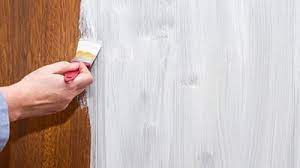
Step 3 – Apply your First Coat Of Primer

In this step considering we have prepared the surface thoroughly, we can now get into the main part which, priming the surface. 

You can use a paintbrush for the job but it will take time yet yield some good results. On the other hand, using a spray gun is the faster option to cover a large surface, but may not deliver the same result as using a roller or brush. 

Put your efforts into spreading the primer evenly across the surface as much as possible. Leaving too thick or too thin in certain areas will not result in satisfactory results. 

Drop your tool roller or a paintbrush in your primer’s basket, don’t try to overfill it. Afterward, move your paintbrush in a straight direction either horizontally or vertically to prevent brush strokes marks and circular marks. 

  • If you’re going to paint color with oil-based paint, use oil-based primers. 
  • If you are going to chalk paint or any water-based paint, latex-based primers would be suitable for the job.

Apply enough primer to cover the wood adequately, but not so much that it results in drip marks and extra goop that takes longer to cure.

Step 4 – Deciding the number of coats

One of the crucial things during primer is to decide how many coats you should apply. If you are clueless about this matter, let’s get into the debate.

The number of coats of a primer depends a lot on the project. Such that, if this is a block of bare wood. Then, you would require at least two coats to get the surface ready for the paint color. And when it comes to repainting. 

At that point, primer really isn’t needed unless you observe some missing spots or just one coat of latex-based primer would be enough to cover them up. 

Moreover, priming on a darker color requires more coats, in this sense, you will want to use 2-3 coats of primer to ensure that the previous color will get covered thoroughly after the primer has been dried. That happens with the dark color tend to absorb light color effectively.

Step 5 – (Final step) Appling Paint Color

Now coming to the applying color. As mentioned earlier, you would need to follow the combination of oil-paint color with oil-based primers, while the water-based color with latex-based paint. Following this way, you will get results that will last for years.  

Some other things are to be followed.

Don’t apply a color coat if the applied primer has not dried yet. It takes 24 hours. 

Even if you observe the top layer has been dried but still you should give it enough time to be cured. Before you apply your second coat.

12 Reasons: Why you Should sand after priming wood?


Should i sand after applying primer

If you’re diving into the world of woodworking or home improvement, you’ve likely encountered the age-old debate: should I sand after priming wood?

It’s a question that’s sparked countless discussions among DIY enthusiasts and professionals alike.

While there isn’t a one-size-fits-all answer, I’m here to shed some light on the matter and provide you with five compelling reasons why sanding after priming wood might just be the right move.

Key Points: Should I Sand After Priming Wood?

1. Smoothness Matters: Sanding after priming wood helps create a smooth surface, eliminating imperfections and brush marks. This sets the stage for a flawless paint finish that looks professional.

2. Enhanced Adhesion: Sanding provides a slightly roughened surface that boosts paint adhesion. This extra grip ensures your paint job remains intact and resists peeling, even in high-traffic or outdoor areas.

3. Defeat Grain Raise: For woods that tend to experience grain raise, sanding after priming helps eliminate the bumpy texture caused by swollen wood fibers. This results in a polished, even surface.

4. Artistic Freedom: Sanding lets you play with color and texture. You can strategically sand areas to create depth and character, giving your project a unique and artistic touch.

5. Efficiency: A smooth, well-sanded surface reduces the need for multiple coats of paint, saving you time and effort. Plus, it minimizes the likelihood of future touch-ups or refinishing.

6. Protection from Stains: Certain wood types can cause stains and bleed-through even after priming. Sanding after priming acts as an extra barrier, preventing these colorants from ruining your paint job.

7. Seamless Repairs: Sanding helps level out patched areas, ensuring repairs blend seamlessly with the rest of the surface. This creates a uniform canvas for your paint application.

8. Professional Touch: Sanding after priming wood is a technique used by professionals to achieve outstanding results. It’s a step that elevates the quality of your work from good to exceptional.

9. Longevity and Durability: A well-sanded surface is less prone to chipping, cracking, and peeling, contributing to the longevity and durability of your woodworking projects.

10. Mindful Experience: Sanding can be a therapeutic and mindful step in your woodworking process. It allows you to connect with your project on a deeper level and focus on the finer details.

11. Personal Satisfaction: Giving your project the attention it deserves through sanding adds a layer of personal pride and satisfaction to your woodworking journey.

12 Reasons: Why you Should sand after priming wood?

1. Smoother Surfaces, Better Results

Sanding after priming wood is like adding that final touch of finesse to your masterpiece.

Even if you’ve meticulously applied primer, there’s a chance you might end up with a few uneven spots or brush marks.

That’s where sanding comes in as your secret weapon. A gentle sanding session with fine-grit sandpaper helps smoothen out any imperfections, leaving you with a surface that’s ready to absorb paint like a sponge.

The result? A professional-looking finish that’s sure to impress.

2. Adhesion Amplified

Ever wondered why paint sometimes peels off or looks uneven?

It’s often due to poor adhesion. Sanding after priming wood boosts adhesion by creating a slightly roughened surface for the paint to grip onto.

Think of it as providing a textured playground for your paint to bond with.

This extra grip ensures your paint job stays put and maintains its integrity over time, especially in high-traffic areas or outdoor projects exposed to the elements.

3. Say Goodbye to Grain Raise

If you’re working with certain types of wood, you might be familiar with the pesky phenomenon known as grain raise.

This occurs when wood fibers swell after primer application, creating a bumpy texture that’s anything but desirable. By giving the primed surface a light sanding, you can nip grain raise in the bud.

Sanding smooths out these raised fibers, leaving you with a surface as polished as your woodworking skills.

4. The Art of Blend and Blur

Let’s talk about the artistic aspect of your project.

Maybe you’re going for that vintage distressed look or aiming for a seamless color transition between different sections.

Sanding after priming wood allows you to play with nuances of color and texture.

You can strategically sand certain areas to reveal underlying layers, creating a sense of depth and character.

It’s like being an artist with a canvas, and sandpaper is your brush.

5. Time and Effort, Invested Wisely

You’ve put in the effort to prime your wood, so why not maximize the impact of your hard work?

Sanding after priming wood may seem like an additional step, but it’s a shortcut to achieving professional-level results without cutting corners.

Remember, the key is finesse, not force. A gentle sanding session doesn’t take much time, and the payoff is well worth it in the form of a stunning finish that stands the test of time.

6. Say No to Stains and Bleed-Through

Some wood types, particularly those with high tannin content like oak or cedar, are notorious for causing stains and bleed-through when painted.

Even a well-applied primer might not fully block these colorants from seeping through.

Here’s where sanding after priming wood steps in as your troubleshooter.

By sanding the primed surface, you create an additional barrier that helps prevent those unsightly stains, giving you a flawless finish that’s free from unwanted surprises.

7. Patch Perfection

Imagine you’ve patched up knots, dings, or imperfections in your wood with a filler or putty.

While priming helps seal these repairs, it doesn’t always create a seamless surface.

That’s where sanding works its magic.

Sanding after priming wood helps level out patched areas, ensuring they blend seamlessly with the rest of the surface.

Your repairs become virtually invisible, and you’re left with a smooth, uniform canvas ready for your artistic touch.

8. Time is of the Essence

While sanding after priming might seem like an extra step, it can actually save you time in the long run.

A smooth, well-prepped surface allows paint to glide on effortlessly, reducing the need for multiple coats.

This means less time waiting for paint to dry and more time enjoying your finished project.

Plus, when your paint adheres better, you’ll likely need fewer touch-ups down the road, saving you both time and frustration.

9. The Professional Touch

Whether you’re a seasoned pro or a DIY enthusiast, achieving professional-looking results is always the goal.

Sanding after priming wood is a technique that many professionals swear by to take their projects to the next level. It’s that extra step that elevates your work from good to outstanding.

So, if you’re aiming for results that turn heads and garner compliments, don’t skip the sanding—it’s the secret to that polished, refined finish.

10. Longevity and Durability

Woodworking projects, especially those exposed to wear and tear, need to withstand the test of time. Sanding after priming wood not only enhances the aesthetic appeal but also contributes to the longevity and durability of your creation.

A well-prepped surface is less prone to chipping, cracking, or peeling, ensuring your masterpiece remains stunning for years to come.

11. A Mindful Meditative Step

Sanding might sound like a mundane task, but it can be surprisingly therapeutic.

It’s a moment to slow down, focus on the details, and connect with your project on a deeper level.

As you run your hand over the smooth surface, you’re not just perfecting the wood—you’re also indulging in a mindful, almost meditative, experience that’s as rewarding as the end result itself.

12. Your Personal Stamp

Lastly, sanding after priming wood allows you to put your personal stamp on your projects.

It’s a chance to fine-tune, refine, and customize every inch of your creation.

By paying attention to the smallest details, you’re infusing your work with a level of care and dedication that sets it apart.

The pride that comes from knowing you’ve given your all to a project is immeasurable and adds an extra layer of satisfaction to your woodworking journey.

8 Tips for Sanding Before After Primer

1. Choose the Right Sandpaper

When it comes to sanding after priming wood, the right sandpaper can make all the difference.

Opt for a fine-grit sandpaper, such as 220-grit or higher.

This grit is gentle enough to smooth the surface without causing excessive abrasion.

If you’re dealing with rough patches or imperfections, you can start with a slightly coarser grit and gradually move to finer grits for a polished finish.

2. Light and Even Pressure

Remember, you’re aiming to finesse the surface, not strip it down.

Apply light and even pressure as you sand. Let the sandpaper do the work, and avoid pressing too hard.

This minimizes the risk of over-sanding or creating uneven spots. Keep your strokes consistent and go with the grain of the wood for the best results.

3. Mind the Dust

Sanding creates a fair amount of dust, which can be a nuisance and potentially harmful to your health if inhaled.

To keep the workspace clean and safe, consider using a dust mask, safety goggles, and a vacuum or dust collection system.

It’s a small investment that pays off in terms of both cleanliness and your well-being.

4. Test a Hidden Area

Before you launch into sanding the entire primed surface, it’s a good idea to test your sanding technique on a small, inconspicuous area.

This helps you gauge the effect of sanding on your particular wood and primer combination.

It’s better to make any adjustments early on rather than risk damaging the visible parts of your project.

5. Wipe It Down

Once you’ve finished sanding, wipe down the surface with a clean, damp cloth to remove any residual dust.

This ensures that the primed wood is clean and ready to receive the paint. A clean surface promotes better adhesion and a flawless finish.

6. Patience is Key

Sanding after priming wood is a step that requires patience and attention to detail.

Take your time, and don’t rush through it.

Remember, the goal is to achieve a smooth and polished surface that sets the stage for your paint job.

The extra time you invest in sanding will undoubtedly reflect in the final result.

7. Evaluate and Adjust

After you’ve completed the sanding process, take a step back and evaluate the surface.

Look for any remaining imperfections, uneven spots, or areas that might need additional attention.

If necessary, you can perform a light touch-up sanding on these specific areas before proceeding to the painting stage.

8. Enjoy the Rewards

Once you’ve sanded after priming wood and painted your project, take a moment to appreciate the results of your efforts.

The smooth, professional finish you’ve achieved is a testament to your skill and dedication.

Whether it’s a furniture piece, cabinetry, or a decorative item, your project will stand out as a true work of craftsmanship.

Different types of primers for wood


Types of primers

To make your painting job last longer the primary layer which is basically a layer of a primer plays an important role. 

But there are so many types of primers available, which one should I use for my painting project? Let’s find out.

Primers differ in their properties, each has specific uses, pros, and cons and demands a certain surface to better adhere to. Not familiarizing yourself with them will put you at a greater disadvantage.

With that said, regardless of the surface, you’re going to put primer on, metal, concrete, drywall, wood, etc. Understanding them better will give you an advantage in the painting process. Since types of surfaces demand certain primers be applied onto and skip priming is not advisable because the results will be unattractive. 

You can find out more about what happens when you skip priming?

In this blog post, I’m going to review the types of primers available today and will also mention which surfaces they are designed to be applied onto. Let’s get started.

What are some types of primers? 

But first, here are the types of primers.

Oil-based Primer- An oil-based primer has oil as the main agent and is better adhered to oil-based paints but other paints can be applied onto it, such as latex or water-based paints.

Latex-based Primer- They are basically water-based, use water as the base. They come in handy when preparing surfaces other than wood such as unfinished drywall made of bricks or concrete, cost less, and offer a faster drying time.

Shellac Primer- They are also called stain-blocking primers, beetles are used in their production.  For painting over problematic old varnishes, stains, plastic, oil-based paint, metal, and ceramic tile, these are better suited to use as a stain-blocking primer. 

Oil-based primers

Oil-based primers are suitable for many surfaces no matter if the surface is finished with stain, paint, varnish, or a block of bare naked wood. 

These primers have a good adhesive quality, providing an excellent base over porous surfaces since they fill in wood-pores better than any other primer, their dense nature also has a lot to contribute there.

They are also effective at blocking moisture and other hazards. They are good blockers to defend stains from sticking, for instance, furniture tends to collect scum, and that includes nicotine, dust, smoke stains, etc. 

The best thing about oil-based primers and paints is that even if they get dirt on them, cleaning them off is not something difficult and time-consuming. A wet rag is all you need to get your cleaning job done.

Moreover, woods that bleed out such as cedar or redwood can only be primed thoroughly with a primer like this, or stain-blocking primers also do well, water-based primers will not stick to them, if you use them anyway, they will make the finish coat get peeled-off very soon.

Oil-based primers are the best of both worlds, either your project is indoor or outdoor. Since they are designed to withstand temperature effects such as direct sunlight or humidity, as well as indoors they shield a coat that can prevent your kitchen cabinets from getting damaged from smoke. 

Though they emit high VOC compared to latex primers, therefore, people prefer latex for indoor priming projects. Keep in mind that, when it comes to getting them completely off from a surface for some reason, these types of primers take a lot of cleaning effort compared to water-based ones.

Compatible surfaces

Although oil-based primers provide benefits to a variety of surfaces, these are primarily used as a base coat for finishing agents on wood. Metallic surfaces are also an excellent choice because these primers resist the formation of rust, which is impossible for latex-based primers.


Unfinished or bare wood can benefit from oil-based primers because they seal the porous surface of woods, allowing the paint to cover better. These stop the tannins in woods, like cedar or redwood, from penetrating the surface of the paint.

Advantages of oil-based primers

  • Good water-resistant ability.
  • Highly-protective
  • Latex-based paints are compatible.
  • Good Blocking stainers.
  • Used for indoor or outdoor projects.
  • Ideal for bare wood to stop bad tannin’s bleeding effects.
  • Are Easy to clean off.

Disadvantages of oil-based primers

  • Contain High VOC (Volatile organic compounds)
  • Hard to remove off of a surface.
  • Are prone to become brittle when exposed to sunlight for a long period.
  • Have a longer drying time of about 6-8hours.

Latex-based Primer

Latex-based primers should be your best bet if you want to prime on drywalls made of bricks, concrete, or any smooth surface like plastic as well. These are cost-effective than others yet get the job done just fine. 

However, they are not compatible with oil-based paints so you should be using only water-based paints over these primers. This is the most general guideline that must be followed.

With a fast-drying time, you are ensured to get your project painted quickly, also, applying these primers on a surface is easier than oil-based primers. The reason for this is, of course, is their lower density.

And their coats are easy to be cleaned off, unlike oil-based primers, they don’t require any harsh cleaning agent. This ability could be an advantage or disadvantage at the same time depending on the situation you’re into.

Lastly, latex-based primers are problematic if you want to clean any dust or stain from the surface. As they absorb water, they are more likely to become wet, making them more likely to come off when you only clean the dust off.

Water-soluble primers are easy to clean. Low-VOC primers reduce the number of harmful chemicals in an environment by eliminating oil-based or shellac primers.

Compatible surfaces 

The ideal surfaces to use latex primers on are as follows:

In general, the latex-based primers are used mostly on priming walls made of bricks, concrete (not wooden walls) that are going to have chalk-paint or water-based paint. But you can use these primers on plywoods, woods can also be primed in conjunction with galvanized metals and bricks.

Advantages of latex-based primers

  • Cost-effective.
  • Have a quicker drying time.
  • Are easy to apply. 
  • Ideal for priming drywalls, masonry, as well on hardwoods.
  • Contain low or No VOC, which is good for health.
  • Cleaning them off from the surface is easy.
  • Less susceptible to getting cracks when exposed to direct sunlight.

Disadvantages of latex-based primers

  • Over bare woods, they raise the grains due to water.
  • Lack in providing a protective coat to block stains.
  • Create a weak bond with oil-based paints.

Shellac Primer

After latex or water-based and oil-based. The next popular type of primer is shellac primers. Fast-drying these primers, often named bonding primers. They are used on an array of surfaces, including wood, metal, and even on drywalls.

Similar to oil-based primers, their applied coats are tough and offer a stain-blocking capability, woods that leak tannins such as pinewood or redwood, are well covered with these primers. Having them over a surface prevents many stains such as smoke, nicotine, and water damage.

Shellac primers are supportive for both types of paints, water or oil can be applied. However, oil-based paints are ideal and create a stronger bond than other paints.

Although shellac primers work in a similar way for both interior or exterior applications. With that said, indoors on drywall are not as durable as latex primers, and for exterior applications they just do fine, increasing the finish coat strength in harsh environments.

Considering the fact these types of primers are not durable and emit a high amount of VOC. Keeping their use to only exterior applications is a good decision.

Compatible surfaces 

Shellac primers are versatile to be used on almost all surfaces in conjunction with any paint you want that will work just fine.

Generally, the best surfaces for these primers are bare woods, to provide a smooth end-finish by blocking the tannins and any bleeding of a wood. The fast-drying, highly adhesive products can also be used on metal, plaster, and plastic. In painting ceramics, these primers really make a good choice for artists.

Advantages of shellac primers

  • Fast-drying
  • Compatible with oil and water-based paints.
  • Stain blocking capabilities.
  • Suitable for wooden surfaces, provide a protective coat to stop tannins.
  • Effective for in or outdoor applications.

Disadvantages of shellac primers

  • Extremely high VOC primers.
  • Not durable as others.
  • Costly.
  • Prone to get cracked.

where to use which primer

I’ve mentioned below some surfaces where we need to apply primers beforehand painting.

Surface  Primer to use
Bare wood To make a porous surface sealable, use an oil-based or latex primer.
Drywall For smooth, even surfaces, prime drywall with a latex primer rather than with an oil-based primer.
Stain-prone surfaces A stain-blocking shellac primer is recommended for stained wood, bare wood with high tannin content that is prone to bleeding, walls that have smoke or water stains, and cabinets that are coated with grease.
Painted wood Priming over painted wood showing chalking is usually a good idea with an oil-based primer. or chipping; as it dries, it will become denser, smoother, and less likely to have imperfections.
Metal To prevent the formation of rust on metals such as aluminum, use an oil-based primer, which is resistant to rust formation.
Glossy surfaces Especially when the surface is glossy like glass, plastic, or tile, bonding primer is a good choice to apply over them.

Best primers

KILZ Original Interior Oil-Based Primer/Sealer– BEST FOR WOOD

Photo: amazon.com

Kitchen cabinets, bathroom vanities, or frequently used items like bar stools are especially suitable for the coat of this primer.

 This quart-sized container covers between 300 and 400 sq. ft area. It can be top-coated with latex or oil-based finishes after it gets fuller sired to the touch.

With its oil-based formula and tintable appearance, It primer for Kilz Original prevents water-based stains and odors like smoke.

Additionally, KILZ Original is also appropriate to be applied on drywall, plaster, masonry, brick, metal, and glossy surfaces like tile. 

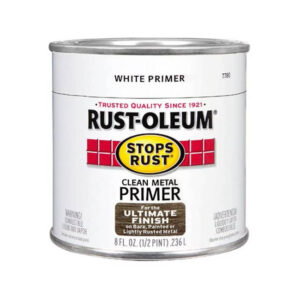
Rust-Oleum Protective Enamel– BEST FOR METAL

The Best Paint Primer Option: Rust-Oleum Protective Enamel
Photo: amazon.com

A clean metal primer from Rust-Oleum is available in half-pint containers to cover a maximum area of 55 square feet, is re-coatable in two hours, and must be painted over with an oil-based paint. 

Use this interior/exterior oil-based primer to prevent rust from forming on bare, painted, or lightly rusted metal. 

Despite its smooth and even formula, this primer adheres well to clean metal surfaces (and to less-than-perfect surfaces too).

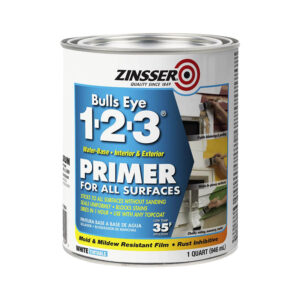
Rust-Oleum Zinsser Bulls Eye 1-2-3 Primer– Best for all

The Best Paint Primer Option: Rust-Oleum Zinsser Bulls Eye 1-2-3 Primer
Photo: amazon.com

Water-based formula repels solvent-based stains (like grease) and resists mildew and peeling and lasts up to 100 square feet (one wall 10 feet wide and 10 feet tall). 

Faster drying of this primer allows a second coat to be applied in an hour with latex-based or oil-based topcoats.

Applied to walls, furniture, fences, and other interiors/exterior surfaces, this versatile, tintable latex primer adheres as strongly to drywall as it does to wood, concrete, masonry, metal, and glossy surfaces like tile. 

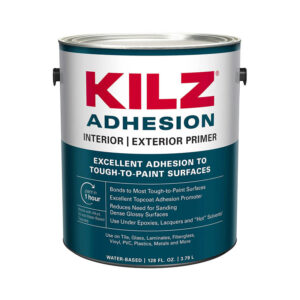
KILZ Adhesion High-Bonding Latex Primer/Sealer– BEST FOR GLOSSY SURFACES

The Best Paint Primer Option: KILZ Adhesion High-Bonding Latex Primer Sealer
Photo: amazon.com

 It comes in one-gallon cans that can cover 300 square feet, dries in one hour, and provides a good base for either latex- or oil-based topcoats.

The next time you’re considering painting a tile backsplash, a lacquer chair, or your outdated gutters, this tintable latex primer can handle a variety of surfaces with its ability to adhere to glass, plastic, tile, Formica, vinyl, glazed brick, metal, and more.