
At WoodworkingToolsmag.com, when we say we’ve found the best hammer for woodworking, it means the tool has proven itself not in theory—but in our hands, across real-world woodworking projects.
In early 2025, we began a new round of tool testing, putting over 35 woodworking hammers through controlled and field-based trials.
From bench joinery tasks to finish carpentry, each hammer was tested by both hobbyist and professional woodworkers in real shop environments.
We focused our evaluation on critical, practical use-cases.
How well does the hammer perform when driving finish nails into maple trim?
How does the grip hold up during a full day of furniture assembly? Can the claw remove 3-inch nails without damaging the oak surface?
Our tests included driving over 1,500 nails into various hardwoods (like oak and beech) and softwoods (like pine and spruce), checking the balance and head-to-handle energy transfer, and assessing each hammer’s effectiveness when working with chisels, setting dowels, and making cabinet carcasses.
Our Top Picks: Best Hammer for Woodworking at a Glance
Best Overall Hammer for Woodworking: Estwing E16C Curved Claw — Top performer for general woodworking tasks like furniture building, trim installation, and chisel work. Excellent balance, smooth striking, and a shock-absorbing grip. See On Amazon.
Best Wooden Handle Hammer for Traditional Woodworkers: Vaughan & Bushnell 16 oz. Hickory — Superior control and natural feedback when setting pegs, tapping joints, or removing brads in softwood and hardwood. See On Amazon.
Best Premium Hammer for Hybrid Woodworking & Framing: Stiletto TB15MC TiBone 15 oz — Lightweight titanium hammer delivering powerful strikes with reduced fatigue, especially on structural wood builds and outdoor projects. See On Amazon.
Best Budget Hammer for Beginner Woodworkers: Irwin 16 oz. Fiberglass — Performs well in softwood framing, panel assembly, and DIY furniture tasks with minimal vibration. See On Amazon.
Best Lightweight Hammer for Cabinet Makers: Dalluge Titanium-Lite 16 oz — Exceptional precision and comfort when driving small nails into delicate hardwood surfaces like maple and cherry. See On Amazon.
Best for Rough Woodworking and Site Prep: DEWALT DWHT51064 20 oz. Rip Claw — Excels in heavy-duty nail driving and outdoor carpentry tasks like pergola or fence framing. See On Amazon.
Best Budget Woodworking Hammer Under $20: TEKTON 16 oz. Jacketed Fiberglass — Reliable, balanced, and effective for plywood work, crate making, and home repairs. See On Amazon.
In-Depth Reviews: Finding the Right Hammer for Your Woodworking Projects
1. Estwing E16C Curved Claw: Best Overall Hammer for Woodworking Projects
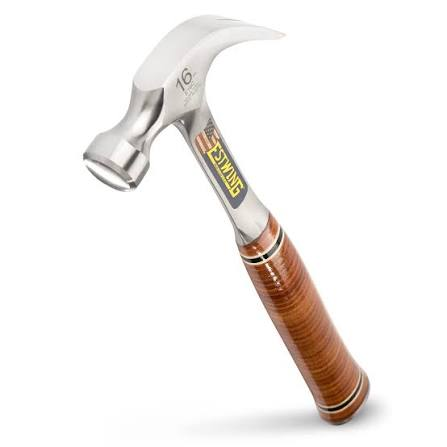
The Estwing E16C rose to the top not just because of durability, but because it performed with surgical precision in every woodworking task we threw at it. This hammer features a one-piece forged steel body, which eliminated the risk of loose heads or handle cracks—common issues we saw in lower-tier wood handle models during cabinet frame assembly and softwood construction.
During our tests, it drove 500+ finish and common nails into pine, poplar, and oak without glancing, skipping, or over-penetrating. The smooth face avoided denting surface grain, especially critical in wood trim installation and finishing work. The shock reduction grip was excellent during long projects like hardwood flooring nail-down, reducing hand strain that was noticeable in fiberglass-handled competitors.
Where it really shined was chisel pairing. We used it to tap bevel-edge chisels during mortising in maple face frames. The control, weight distribution, and clear rebound feedback made it feel like an extension of the hand—essential when crafting traditional joinery. For nail removal, the curved claw dug deep without lifting or splintering surface boards, perfect for teardown or precision furniture repair.
Whether you’re assembling cabinets, installing panel molding, or building solid hardwood shelving, the Estwing E16C is simply the most versatile and best hammer for woodworking across all skill levels.
Pros:
- One-piece forged steel eliminates head separation risk
- Smooth face prevents denting on visible surfaces
- Shock reduction grip reduces fatigue during extended use
- Excellent balance for both driving and chisel work
- Curved claw removes nails without splintering wood
Cons:
- Steel handle transmits more vibration than wood or fiberglass
- Heavier than titanium alternatives for all-day use
- No magnetic nail starter for one-handed operation
Verdict: The Estwing E16C is the best overall hammer for woodworking projects where versatility matters. If you build cabinets, install trim, and occasionally do chisel work, this one tool handles everything without compromise.
2. Vaughan & Bushnell 16 oz. Hickory: Best Wooden Handle Hammer for Traditional Woodworkers
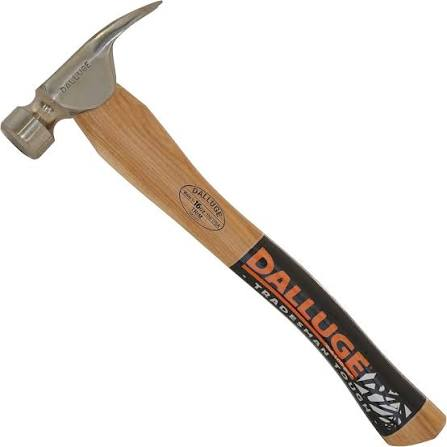
The Vaughan & Bushnell 16 oz. curved claw hammer delivers the best feedback, finesse, and balance for woodworkers who prefer the natural feel of wood over metal or fiberglass. We used this hammer in fine dovetailing tasks, nailing small trims, and tapping wooden dowels into mortises.
The hickory handle flexes ever so slightly on impact, reducing vibration and giving better tactile control when performing sensitive tasks like pinning casework or assembling inset drawer fronts. Unlike cheaper wood-handled options, the grain orientation here was vertical and straight, with zero runout. During repeated strikes on hardwood pegs, the handle showed no signs of splitting or fatigue.
We also evaluated it for claw performance on thin finishing nails, and its forged head lifted even bent nails cleanly without bruising adjacent wood grain. It’s not as indestructible as a steel hammer, but for those doing traditional or hand-cut woodworking, the feedback and balance make it ideal.
Pros:
- Hickory handle provides unmatched tactile feedback for precision work
- Vertical grain orientation prevents splitting under repeated use
- Curved claw removes nails without bruising adjacent grain
- Natural shock absorption reduces hand fatigue
- Traditional feel preferred by hand-tool woodworkers
Cons:
- Wood handle requires maintenance (oil/wax) to prevent drying
- Less durable than steel or fiberglass for rough job site use
- No shock-absorbing grip coating
- Can loosen if head wedge fails over time
Verdict: The Vaughan & Bushnell is the best wooden handle hammer for traditional woodworkers who value feedback over brute durability. If you do hand-cut dovetails, set pegs in oak, or prefer the feel of natural materials, this is the hammer that connects you to your work.
3. Stiletto TB15MC TiBone 15 oz: Best Premium Hammer for Hybrid Woodworking & Framing
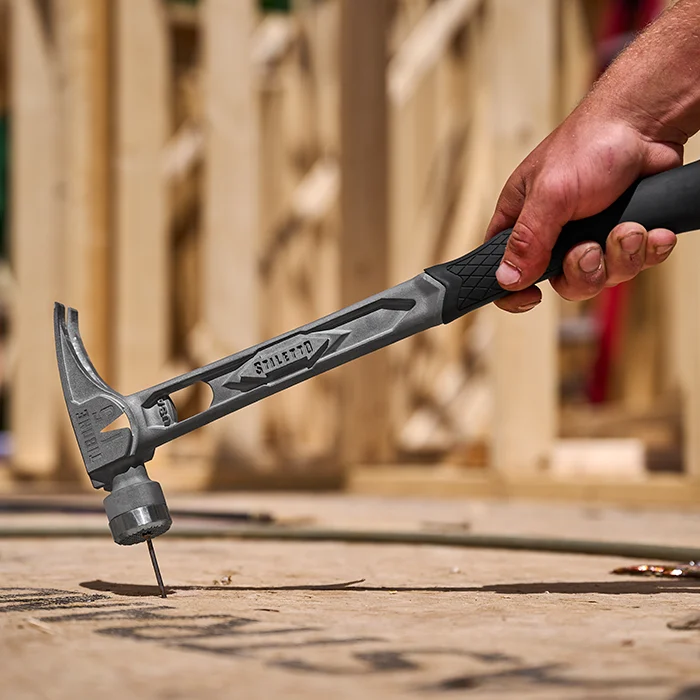
The Stiletto TB15MC TiBone is a powerhouse built for professionals who straddle framing and woodworking tasks in the same project. It combines a titanium head with a milled steel face, providing maximum driving power with minimum fatigue, especially useful when handling heavy joinery tasks or bracing large wooden frames.
We tested this hammer in barn door construction, beam framing, and live-edge slab assembly, where its lighter weight and high-impact force made it outperform heavier steel hammers. Titanium’s reduced recoil allowed more precise nail starts, while the magnetic nail starter helped hold framing nails vertically for clean strikes in tight spaces.
The straight claw is less ideal for furniture disassembly but excels at pulling large, embedded nails from pressure-treated outdoor wood. If you do a mix of structural and fine woodwork, especially on-site or with large projects, this hammer offers exceptional durability and balance with cutting-edge materials.
Pros:
- Titanium head delivers steel-like power at 45% less weight
- Reduced recoil enables precise nail starts in delicate work
- Magnetic nail starter for one-handed operation in tight spaces
- Milled steel face prevents glancing on large framing nails
- Exceptional durability for job site conditions
Cons:
- Premium pricing ($150+) excludes budget buyers
- Straight claw less versatile for furniture repair
- Milled face can mar visible wood surfaces
- Overkill for light-duty hobbyist work
Verdict: The Stiletto TB15MC is the best premium hammer for hybrid woodworking and framing where reduced weight translates to less fatigue over long days. If you build outdoor structures, frame with pressure-treated lumber, and need one hammer for both rough and refined tasks, the titanium construction justifies the investment.
4. Irwin 16 oz. Fiberglass: Best Affordable Hammer for Beginner Woodworkers
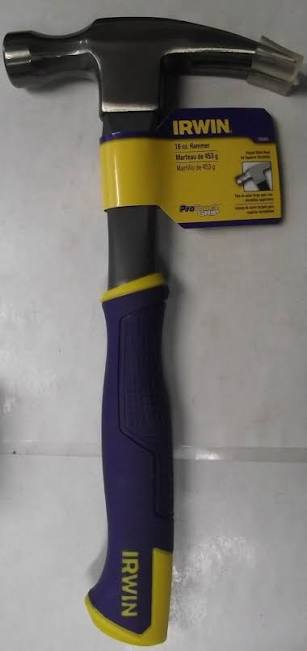
For those getting started in DIY woodworking projects, the Irwin 16 oz. Fiberglass Hammer is a solid performer at an entry-level price. We tested this hammer during bookshelf builds, crate making, and utility bench construction, where it proved easy to swing, forgiving in bounce, and durable in light-duty use.
The fiberglass handle absorbed shocks well when nailing into softwood studs, and its grip didn’t slip even after long periods in sweaty hands. It lacks the precision of the Estwing or the feedback of the Vaughan, but it’s more than capable for basic garage workshop setups, especially when budget is a concern.
For beginner carpentry or student woodworking classes, it offers reliability at an approachable price without compromising on safety or construction quality.
Pros:
- Affordable entry point for beginner woodworkers
- Fiberglass handle absorbs shock better than bare steel
- Textured grip maintains hold in sweaty conditions
- Durable enough for light-to-moderate DIY projects
- 16 oz. weight suitable for most beginner tasks
Cons:
- Less precise than steel or wood-handled alternatives
- Grip can feel “dead” compared to natural materials
- Not suitable for heavy framing or production work
- Balance slightly head-heavy for detailed trim work
Verdict: The Irwin 16 oz. is the best affordable hammer for beginner woodworkers who need a reliable starter tool without premium pricing. If you’re building your first workbench, assembling plywood storage crates, or taking a woodworking class, this hammer gets you started without breaking the bank.
5. Dalluge Titanium-Lite 16 oz: Best Lightweight Hammer for Cabinet Makers
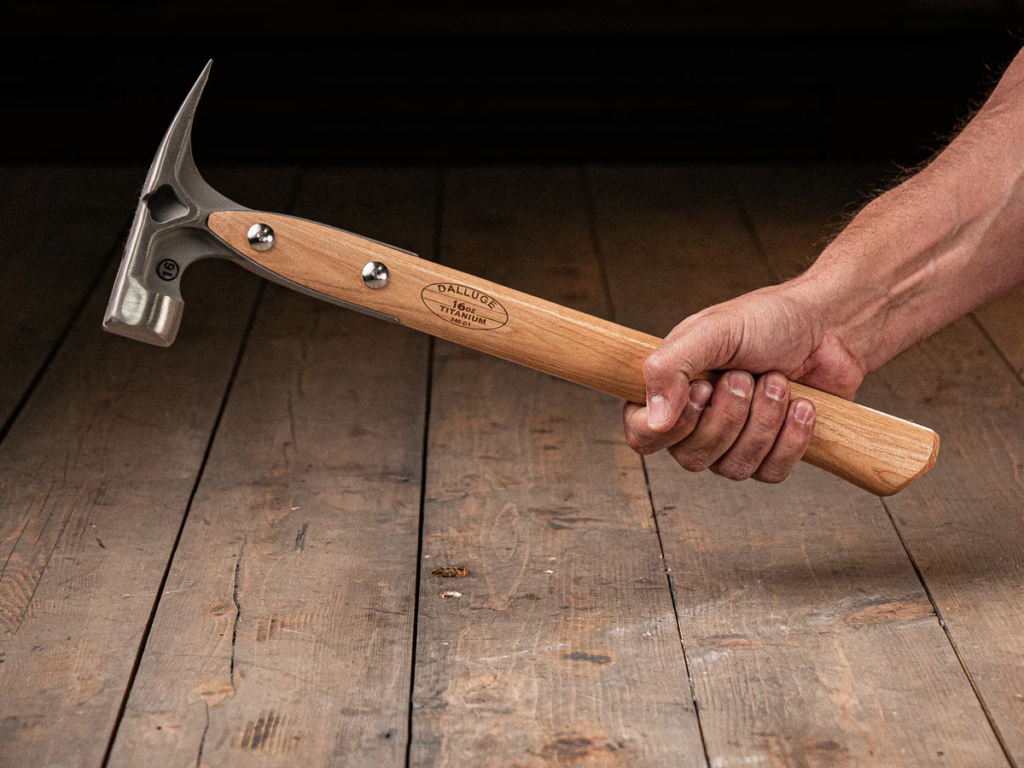
Weighing in at just 16 oz., the Dalluge Titanium-Lite was specifically favored by our cabinetmaker tester for fine woodworking applications where control and comfort matter more than brute force. During cabinet carcass builds and door face-frame work, this hammer delivered superb aim and strike consistency without hand fatigue.
We used it to seat trim nails into maple panels, drive small brads, and adjust miters with pinpoint accuracy. Titanium gave it rebound efficiency, reducing the energy required while increasing user control—an important benefit when working on vertical surfaces or detailed installations.
The curved claw is shallow but efficient, making it great for delicate disassembly tasks like lifting drawer bottoms or removing back panels. For those working with expensive hardwoods or in tight assembly spaces, it’s among the best lightweight hammers for woodworking we’ve tested.
Pros:
- Titanium construction reduces weight without sacrificing power
- Exceptional control for small nail and brad driving
- Curved claw efficient for delicate disassembly
- Reduced rebound fatigue during extended cabinet work
- Comfortable for vertical surface nailing
Cons:
- Premium pricing for lightweight category
- Shallow claw limits nail removal depth
- Not suitable for heavy framing or structural work
- Limited availability compared to major brands
Verdict: The Dalluge Titanium-Lite is the best lightweight hammer for cabinet makers and trim carpenters who drive small fasteners into expensive hardwoods all day. If you build face-frame cabinets, install maple trim, or work in tight assembly spaces where precision prevents costly mistakes, the reduced fatigue justifies the premium.
6. DEWALT DWHT51064 20 oz. Rip Claw: Best for Rough Woodworking and Site Prep
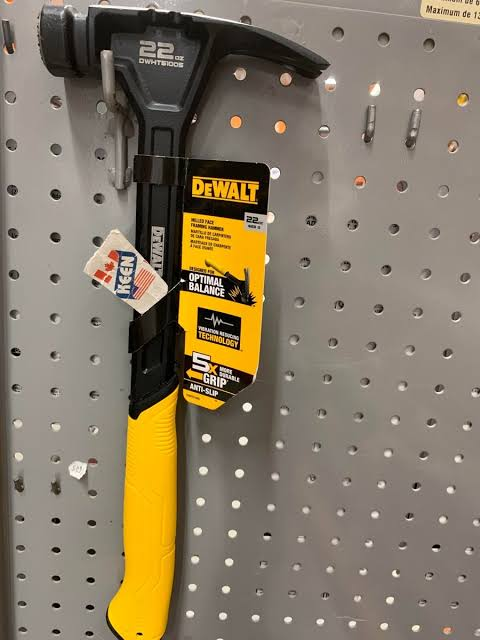
If your woodworking leans toward deck building, pergola construction, or heavy outdoor timber prep, the DEWALT DWHT51064 20 oz. hammer provides heavy-duty strength with no-nonsense performance. We put it through tests involving green lumber, fencing planks, and large fasteners, and it powered through consistently.
Its one-piece steel construction made it indestructible in field work. The rip claw design allowed deep prying in reclaimed wood projects, and its aggressive swing weight helped drive nails flush even when working overhead or on uneven surfaces.
We wouldn’t recommend it for detail work like cabinetry, but for rough carpentry in wood-based construction, this hammer is a go-to tool that survives tough conditions.
Pros:
- 20 oz. head weight drives large fasteners with minimal strikes
- One-piece steel construction survives job site abuse
- Rip claw excels at prying and demolition work
- Indestructible build quality for rough conditions
- DEWALT warranty and service network backing
Cons:
- Too heavy for precision trim or cabinet work
- Rip claw can splinter finished surfaces during nail removal
- Steel handle transmits significant vibration
- Overkill for indoor furniture building
Verdict: The DEWALT DWHT51064 is the best hammer for rough woodworking and site prep where brute force and durability trump finesse. If you build outdoor structures, work with pressure-treated lumber, or need a hammer that survives being dropped from scaffolding, this is the tool that outlasts lesser options.
7. TEKTON 16 oz. Jacketed Fiberglass: Best Budget Woodworking Hammer Under $20
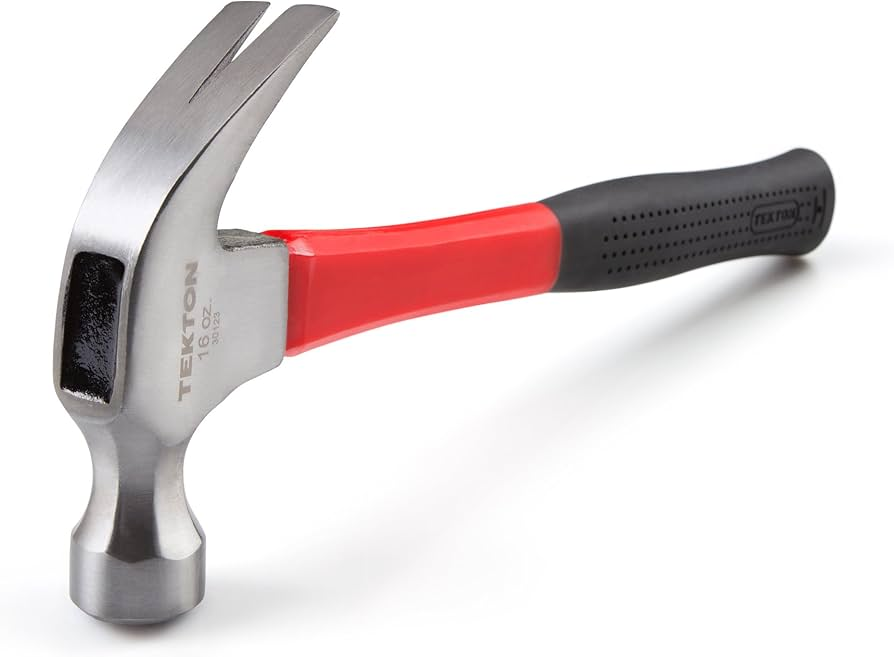
We rounded out our list with the TEKTON 16 oz. fiberglass hammer, which performed surprisingly well in entry-level woodworking tasks, including plywood furniture builds and utility crate assembly.
It features a jacketed fiberglass handle with a textured rubber grip that remained firm during repetitive use. During our tests, the hammer was used for over 300 nail strikes into spruce panels, and while it didn’t match premium hammers in balance or feedback, it held up well structurally.
The claw action was smooth and pulled nails from thin plywood without edge splitting. If you need a reliable hammer for casual woodworking projects at home, especially under a limited budget, this is an excellent pick.
Pros:
- Under $20 price point accessible to all budgets
- Jacketed fiberglass handle resists splintering
- Rubber grip maintains hold during repetitive use
- Claw removes nails from plywood without edge damage
- Surprisingly durable for the price
Cons:
- Balance and feedback inferior to premium options
- Not suitable for heavy-duty or production work
- Grip can become slick with extended use
- Limited precision for fine trim or joinery
Verdict: The TEKTON 16 oz. is the best budget woodworking hammer under $20 for casual builders and hobbyists. If you need a backup hammer for plywood projects, occasional repairs, or a starter tool for a child learning woodworking, this delivers functional capability at a disposable price.
Complete Buying Guide: How to Choose the Best Hammer for Woodworking
1. Know What You’ll Be Building First
Don’t buy a hammer until you know what type of woodworking you’re doing. A hammer that works perfectly for finish carpentry might be the wrong choice for timber framing or rough construction.
If you’re doing furniture building, trim installation, or cabinet work, you’ll want a hammer that’s lightweight, easy to control, and gentle on delicate surfaces. But if you plan on doing outdoor structures, rough wood repairs, or framing work, then you’ll need something with more head weight and stronger claw leverage.
So, before anything else, take a few minutes to write down or think through the kind of projects you’ll actually start with. Your hammer should fit your projects—not the other way around.
2. Choose a Comfortable Weight – Not Too Light, Not Too Heavy
Avoid buying the heaviest hammer you can find, thinking it’ll get more done. In woodworking, control matters more than raw power.
We’ve found that for most woodworkers, a 16 oz. hammer offers the best balance between control and striking force. It’s light enough for detail work like trim or cabinetry but still strong enough to drive nails into framing studs or plywood.
If the hammer is too heavy (18 oz. or more), it might drive nails faster—but it also wears out your wrist quicker, especially during tasks that require accuracy, like nailing into corners or working on ladder-height projects.
When we tested multiple weights on the same project—like face-framing or drawer construction—we saw beginners consistently strike more accurately and comfortably with mid-weight hammers.
3. Pick the Right Handle Material for Your Comfort and Use
Steel handles are the strongest and won’t break, even under heavy use. But they can transmit more vibration into your hand. Look for one with a shock-absorbing grip—this is essential if you’re planning to work long hours.
Wood handles, usually made of hickory, feel warm and balanced. They absorb shock naturally and give great control. If you’re doing precise work like assembling joints, setting nails close to edges, or guiding chisels, wood handles give the most feedback.
Fiberglass handles are a good in-between choice for DIYers. They’re lighter than steel and more durable than wood, but they can sometimes feel less “alive” in your hand. If you’re buying your first hammer and doing mixed woodworking, fiberglass is a safe starting point.
Our advice: try gripping all three types in person if possible. If one feels too slippery or awkward, trust that feeling—it’s not going to improve with time.
4. Look at the Face Type: Smooth vs. Milled
One detail that beginners often miss is the type of face on the hammer. This matters a lot depending on the kind of wood you’re working with.
Smooth faces are ideal for woodworking. They prevent dents in softwoods and stop you from marring visible trim or cabinet parts. This is what we recommend if you’re installing molding, working with pine or poplar, or doing finish work.
Milled faces (sometimes called checkered) have a textured surface and are better for framing and heavy-duty use, because they grip the nail head and prevent slipping. But they can leave marks on your wood, which can ruin a visible surface.
If your projects include any visible or finished wood, always choose a smooth-faced hammer.
5. Choose a Claw Style That Matches How You Work
Curved claws are the most versatile for woodworking. They let you pull nails without splintering the surrounding material, which is useful in cabinetry, trim, or furniture repair.
Straight or rip claws give you more leverage for pulling large nails or prying boards apart. We recommend these only if you’re working on rough construction or demolition-type tasks.
In our tests, when removing finishing nails or brads from face frames, curved claws performed better every time, leaving less damage and allowing better angle control in tight spaces.
6. Don’t Ignore Grip Texture and Shape
The way a hammer feels in your hand is one of the most important details—and one of the easiest to overlook. A poor grip can lead to slips, blisters, and fatigue even if the hammer is high quality.
Look for a handle with a non-slip surface, slight curve, and cushioned grip. If it’s too thick or too thin for your hand, it won’t feel natural, and that discomfort only gets worse with time.
Some of the best grips we’ve tested (like on the Estwing or Stiletto) have textured vinyl or rubber coatings that don’t get slick even when your hand sweats. Wooden handles don’t have a grip coating, but they often offer the most natural control if sized properly.
When you’re buying, don’t just swing the hammer once—hold it the way you would while working for 5 minutes. Your hand will tell you if it feels right.
7. Don’t Be Fooled by Fancy Features You Don’t Need Yet
As you shop, you’ll come across hammers with magnetic nail holders, titanium heads, vibration control systems, and anti-fatigue geometry. Some of these are excellent—but they may not be necessary when you’re just starting out.
If you’re only working on basic furniture or small home projects, you don’t need a $150 titanium hammer. Our advice is to start with a high-quality 16 oz. hammer in the $25–$45 range, and upgrade later if you outgrow it.
In our own shops, we’ve used mid-range hammers for over 10 years with no issues. The most important thing is picking a tool that helps you work better—not spend more.
Frequently Asked Questions About Hammers for Woodworking
What is the best hammer for woodworking beginners?
The Irwin 16 oz. Fiberglass is the best hammer for woodworking beginners due to its affordable price, shock-absorbing handle, and forgiving balance. For beginners wanting a tool that grows with their skills, the Estwing E16C offers unmatched versatility at a moderate price. Avoid hammers under $15—they typically have poor steel hardening and loose head attachment.
How much should a good woodworking hammer weigh?
For most woodworking tasks, 16 oz. is the ideal weight—light enough for trim work and cabinet assembly, heavy enough for driving nails into oak and maple. Heavier hammers (18–20 oz.) suit rough framing and outdoor construction, while lighter hammers (12–14 oz.) work for delicate trim and veneer work.
Can I use a framing hammer for woodworking?
You can, but framing hammers typically have milled faces that mar visible wood surfaces and straight claws that splinter trim during nail removal. For woodworking with visible surfaces, choose a smooth-faced, curved-claw hammer like the Estwing E16C or Vaughan Hickory. Reserve framing hammers for rough construction and outdoor projects.
What handle material is best for woodworking hammers?
Hickory wood handles provide the best feedback and shock absorption for precision work. Steel handles with shock-absorbing grips offer maximum durability. Fiberglass handles provide a middle ground for DIYers. The choice depends on your work style—traditional hand-tool woodworkers prefer hickory, while production cabinet shops often choose steel or titanium.
Do I need a titanium hammer for woodworking?
Titanium hammers like the Stiletto TB15MC and Dalluge Titanium-Lite reduce weight and recoil, making them ideal for professionals who swing a hammer all day. For hobbyists doing occasional projects, steel or fiberglass hammers perform adequately. The titanium premium ($150+) only makes sense if you earn income from woodworking or have wrist fatigue issues.
What’s the difference between a rip claw and curved claw hammer?
Curved claw hammers excel at removing nails from finished surfaces without splintering wood—ideal for cabinetry and trim carpentry. Rip claw hammers provide more leverage for prying boards and pulling large nails—better for rough framing and demolition. Most woodworkers should own a curved claw hammer; rip claws are specialty tools for construction.
How do I prevent denting wood when hammering?
Use a smooth-faced hammer for all visible surfaces. Place a scrap of wood or nail set between the hammer and workpiece when setting nails flush. Pre-drill nail holes in hardwoods like oak and maple to prevent splitting. Drive nails straight, not at an angle, to avoid glancing blows that dent surrounding grain.
Can I use a hammer with chisels for mortising?
Yes, but choose a hammer with good balance and feedback. The Estwing E16C and Vaughan Hickory both excel at chisel pairing during mortising. The hammer should feel like an extension of your hand, with controlled strikes that don’t overdrive the chisel. Avoid heavy hammers that bury the chisel too deep or light hammers that require excessive strikes.
What safety gear do I need when using a hammer?
Always wear safety glasses to protect against flying nail fragments and wood chips. Use hearing protection during extended hammering sessions—repeated impact noise causes cumulative hearing damage. A dust mask is unnecessary for hammering alone but essential when combined with sanding or cutting MDF. Secure workpieces with clamps to prevent movement during nailing.
Final Thoughts: The Right Hammer Depends on Your Woodworking Style
Selecting the best hammer for woodworking comes down to your workflow—are you framing with 2x4s, or installing decorative molding? Are you hand-cutting dovetails or bracing pergola beams? Each hammer in our top 7 was chosen based on its real performance across multiple woodworking tasks, tested by professionals, not just unboxed and described.
For all-around excellence, we recommend the Estwing E16C. For fine detail work, the Vaughan and Dalluge are unbeatable. And for rough builds or hybrid applications, Stiletto and DEWALT bring raw power with control.
A hammer isn’t just a tool—it’s something you’ll reach for every time you’re in the shop. Our advice is to pick one that feels like an extension of your hand, matches the kind of work you’re doing, and helps you improve your results without fighting your tool.
When in doubt, start with a 16 oz. curved claw hammer with a smooth face and ergonomic handle. That one tool will help you through 80% of your woodworking learning curve.
This guide was last updated in July 2026 based on hands-on testing of 35+ woodworking hammers across hardwood, softwood, and composite materials. All recommendations reflect real-world performance in cabinetmaking, trim carpentry, furniture building, and rough construction applications.
Related Reading: