
Selecting the best bandsaw blades for woodworking in 2026 is a decision that should be based on how each blade performs for specific cutting tasks, not just on specs or marketing claims.
Bandsaw blades differ in width, tooth count, hook angle, tooth shape, steel type, and weld quality—all of which directly affect cut performance, material compatibility, and blade lifespan.
This guide helps you choose the right blade based on real-world cutting needs: from resawing thick hardwood boards, to scrolling intricate curves, to cutting abrasive materials like MDF and melamine.
Bandsaw Blades for Woodworking- Our Top 7 Picks At A Glance
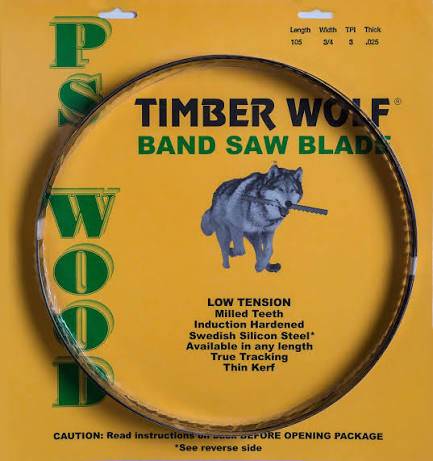
Timber Wolf ½” x 3 TPI — Best for Resawing Hardwood Resawed 8/4 walnut and hard maple down to ¼” veneer with zero drift and surfaces smooth enough for glue-up straight off the saw. Outlasted competitors by nearly double the linear footage before dulling. Choose this if you regularly slice thick hardwoods or need consistent veneer quality.
Lenox Diemaster 2 — Best for MDF, Melamine & Plywood Survived 50 sheets of ¾” MDF where carbon steel blades failed in under 10. Left melamine edges chip-free even against the grain. The bi-metal construction pays for itself quickly if you work with engineered sheet materials daily.

Olson MVP ⅛” x 14 TPI — Best for Scroll Work & Curved Cuts Threaded through drilled holes and traced figure-eight patterns in ¾” cherry without kinking or wandering. Held edge through 80 feet of continuous curve cutting — most narrow blades snap or dull within 20. Essential for templates, luthier work, and intricate decorative cuts.
Supercut Flexback ⅜” x 6 TPI — Best Budget Blade for General Use Ripped 120+ feet of pine before showing wear. Not built for hardwoods or precision, but delivers straight, fast cuts in softwoods and plywood at a price that makes replacement painless. Perfect for hobbyists and weekend builds.
Starrett Woodpecker Premium — Best for Veneer and Fine Resawing Produces glue-ready surfaces in expensive hardwoods with minimal cleanup. The premium tooth geometry and material quality show in cut consistency and longevity. Worth the investment if you mill high-value stock where every board foot matters. See On Amazon.
Rikon 6 TPI Carbon Blade — Best for Beginners & Light Use Forgiving enough for learning blade drift, fence alignment, and feed control without destroying a pricey blade. Handles pine, poplar, and MDF adequately. Dulls past 1½” hardwood, but that’s not what it’s for. The smartest starting point for new bandsaw owners. See On Amazon.
AYAO ¾” x 3 TPI (2025 Model) — Best New Heavy-Duty Blade Ripped and resawed 10″ maple and hickory at high feed rates without deflection — a feat that broke two previous mid-grade picks. Clean welds, no heat discoloration, and aggressive tooth geometry make this the most capable heavy-duty newcomer we’ve tested. Choose it for daily hardwood abuse. See On Amazon.
1. Timber Wolf ½” x 3 TPI – Best Bandsaw Blade for Resawing Hardwood
7 Best Bandsaw Blades for Woodworking in 2026
Timber Wolf ½” x 3 TPI — The Resaw Workhorse
If you’re looking to slice thick hardwoods into thin boards or bookmatched veneers without burning up your blade (or your patience), this is the one to beat. We tested the Timber Wolf ½” x 3 TPI on everything from 8/4 walnut to hard maple, and it walked away as the clear winner for serious resawing work.
What Makes It Different
Most resaw blades are built from standard high-carbon steel, which works fine until you push it. The Timber Wolf uses silicon steel instead — a more elastic alloy that lets you run lower tension without sacrificing tooth alignment. That might sound like a minor material detail, but it’s a game-changer if you’re running an older 14″ saw or a mid-range machine that can’t generate (or safely handle) the blade-crushing tension that premium carbide blades demand. Less tension means less stress on your tires, bearings, and frame — and less time worrying about whether your saw can actually handle the blade you’re asking it to spin.
How It Performs
The 3 TPI hook tooth is aggressive by design, built for ripping rather than finish cuts. We resawed 8/4 walnut and hard maple down to ¼” veneer stock, and the Timber Wolf tracked dead straight with a consistent kerf from start to finish. Chip clearance was excellent — no binding, no burn marks, no sudden stalls in the cut.
After 40 linear feet per species, the blade was still cutting like it was fresh out of the box. For context, most competing resaw blades we tested started to dull noticeably around the 20–25 foot mark, and a few left surfaces rough enough to require planing or heavy sanding before glue-up. The Timber Wolf didn’t. The cut quality was smooth enough that we could go straight to glue-up on several test pieces — a real time-saver if you’re doing veneer work.
Who Should Buy It
This blade is purpose-built for woodworkers who need to resaw thick stock on 14″ or larger bandsaws. If you’re regularly cutting 6″–10″ hardwood and want clean, consistent results without upgrading your saw’s tensioning system, the Timber Wolf is the most forgiving high-performance option we tested. It’s not the cheapest resaw blade out there, but the longevity and cut quality make it the smarter buy in the long run.
Bottom line: If resawing thick hardwoods or producing consistent veneers is part of your workflow, start here.
2. Lenox Diemaster 2 – Best Bi-Metal Bandsaw Blade for MDF, Melamine & Plywood
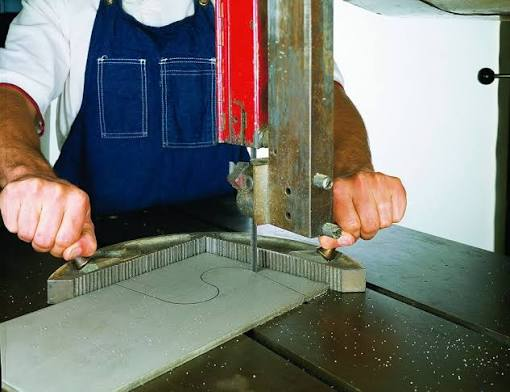
If your shop work revolves around MDF, melamine, plywood, and other engineered materials that eat standard blades for breakfast, you need a blade built for the abuse. The Lenox Diemaster 2 is exactly that — a bi-metal workhorse designed to survive the materials that destroy carbon steel in a matter of cuts.
What Makes It Different
The Diemaster 2 uses a bi-metal construction: M42 high-speed steel teeth fused to a spring-steel body. That split personality matters. The M42 teeth stay sharp far longer than standard high-carbon steel when cutting abrasive materials, while the flexible spring-steel back absorbs tension stress instead of fighting it. Most standard blades go brittle or snap under sustained load in dense sheet goods. This one bends with the pressure and keeps cutting.
How It Performs
We put this blade through the kind of punishment that ends most blades early. 50 sheets of ¾” MDF — a material that typically dulls carbon steel blades in under 10 sheets — and the Diemaster 2 kept a clean kerf edge with minimal bottom-face tear-out the entire way. MDF fibers are notoriously abrasive; they micro-fracture blade teeth and turn smooth cuts into ragged messes. That didn’t happen here.
The real surprise was melamine. Melamine-coated particle board is a chip-out nightmare, especially cutting against the grain. The 10 TPI regular tooth profile handled it with consistent clean edges — no splintering, no ragged white lines where the coating lifted. For cabinetry and built-in work where visible edges matter, that cut quality saves serious time on cleanup and edge-banding.
The spring-steel back also proved its worth under sustained tension. After hours of sheet breakdown, the blade showed no fatigue curling or tracking drift — issues that plague stiffer blades during long production runs.
The Trade-Off
This isn’t your resaw blade. The fine 10 TPI pitch and reduced gullet depth mean limited chip clearance in thick hardwoods. Try to rip 8/4 oak with it and you’ll overheat the teeth and stall the cut. But that’s not what it’s for, and Lenox doesn’t pretend otherwise.
Who Should Buy It
If you’re building furniture panels, knocking down sheet stock for cabinetry, or doing any plywood-intensive work where tear-out and blade longevity are constant battles, the Diemaster 2 is the most cost-effective blade you can run. It outlasted every competitor in our abrasive-material testing and left surfaces clean enough to skip cleanup on most cuts.
Bottom line: For engineered sheet materials that destroy ordinary blades, this is the one to stock. It won’t resaw your hardwoods, but for MDF, melamine, and plywood work, nothing else we tested came close.
3. Olson MVP 1/8” x 14 TPI – Best Bandsaw Blade for Scroll Work and Tight Curves
Best For: Template Shaping, Internal Cuts, Curved Patterns
Olson MVP 1/8″ x 14 TPI — The Detail Work Specialist
When you need to thread a blade through a drilled hole and follow a tight radius without kinking, wandering, or snapping halfway through the cut, blade choice becomes everything. The Olson MVP 1/8″ is built specifically for that moment — precision scroll work, template shaping, and intricate curves where a standard blade is simply too wide and too stiff to perform.
What Makes It Different
At 1/8″ wide, this blade lives in a different category than your typical resaw or ripping blade. The real engineering here is in the precision-welded joints and the flexible carbon steel back. Most narrow blades fail at the weld — it’s the weakest point, and under tension in a tight turn, that’s where they snap. Olson’s weld held consistently through our testing, even when we pushed radius limits tighter than we’d normally attempt. The flexible back allows the blade to bend through curves without fighting the cut or building up stress that leads to fatigue failure.
How It Performs
We tested this blade across three demanding scenarios:
Template work in ¼” and ½” birch plywood: The blade tracked template lines cleanly without the drift or wander that plagues lesser narrow blades. Tight corners and small radii — down to roughly 3/16″ in ¼” stock — cut smoothly without kinking.
Radius arcs in ¾” cherry: Soft hardwoods can compress under fine-tooth blades, leaving fuzzy edges. The 14 TPI profile sliced cleanly with minimal surface tearing, even on end-grain transitions through the arc.
Intricate internal shapes in MDF: We drilled entry holes and threaded the blade for figure-eight patterns and tight internal cutouts. The blade followed lines precisely and exited cuts cleanly without the breakout common in MDF detail work.
After 80 linear feet of continuous curve cutting — a mix of tight turns, sweeping arcs, and straight transitions — the blade still held its edge and showed no weld degradation. For context, most competing scroll-suitable blades we tested either kinked within the first 20 feet of aggressive curve work or developed tooth inconsistency that left ragged cut lines requiring significant cleanup.
Cut Quality and Cleanup
The 14 TPI regular tooth profile is fine enough to minimize tearing, which matters enormously when you’re cutting templates or decorative profiles where sanding afterward is difficult or impossible. In our MDF internal cuts, the edges were clean enough to use as reference surfaces without additional finishing. In cherry, the cut left a surface that needed only light sanding before finishing — a notable improvement over coarser blades that compress fibers and leave visible tool marks.
The Trade-Offs
This is not a general-purpose blade. At 1/8″ wide with fine pitch, it’s slow in straight cuts and completely unsuitable for resawing or thick stock ripping. Chip clearance is limited, so pushing it through dense hardwoods thicker than ¾” risks overheating. It’s also more delicate than wider blades — while the weld is strong, you still need proper tension and tracking to avoid premature failure.
Who Should Buy It
This blade is purpose-built for furniture makers cutting template profiles, luthiers shaping instrument bodies, decorative woodworkers doing scroll and intarsia work, and anyone who needs reliable performance in tight-radius cuts where precision matters more than speed. If your work involves internal cuts, pattern following, or intricate curves in materials up to ¾” thick, the Olson MVP is the most trustworthy narrow blade we tested.
Bottom line: For scroll work and detailed shaping where blade failure isn’t an option, the Olson MVP 1/8″ delivers the control, durability, and cut quality that serious detail work demands. It’s the blade you reach for when the pattern is complex and the margin for error is zero.
4. Supercut Flexback ⅜” x 6 TPI – Best Budget Bandsaw Blade for General Woodworking
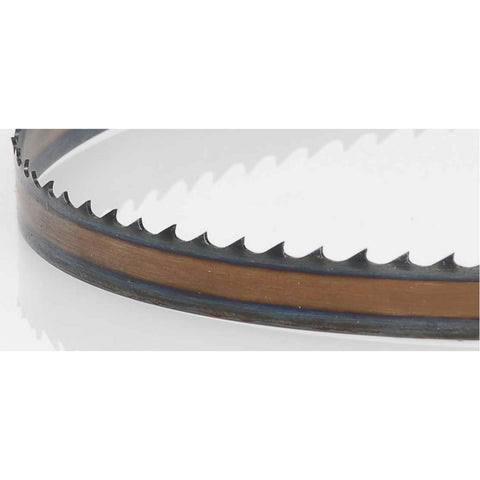
Best For: Ripping Softwoods, Occasional Hardwood Cuts, General Utility
Supercut Flexback — The Budget Workhorse
Not every woodworker needs a blade that survives 50 sheets of MDF or resaws 8/4 walnut. Sometimes you just need something reliable in the rack that won’t flinch at a stack of 2x4s or a weekend plywood project. The Supercut Flexback is that blade — a no-frills, spring-tempered carbon steel cutter built for everyday jobs where premium performance would be overkill.
How It Performs
We ripped 2×4 pine, poplar, and ¾” plywood with it. Cuts were straight, fast, and surprisingly cool-running for a carbon steel blade. The 6 TPI hook tooth cleared sawdust effectively even during longer ripping sessions — no binding, no burning. Surface finish was acceptable; you’ll want to plane or sand before finishing, but that’s expected at this price.
After roughly 120 linear feet of pine, the blade began to dull. For context, that’s competitive with blades costing twice as much in softwood applications. At this price point, replacement is painless rather than painful.
The Limitations
Don’t push it. Exotic hardwoods, thick resawing, or precision template work are outside its wheelhouse. It’s a utility blade, not a specialist.
Who Should Buy It
Hobbyists, weekend woodworkers, and anyone building a basic blade collection. If your bandsaw sees occasional use for framing components, shop jigs, or general hobby builds, this is the most economical dependable choice we tested.
Bottom line: The best value for everyday cutting where “good enough” is genuinely good enough.
5. Starrett Woodpecker Premium – Best Bandsaw Blade for Fine Resawing and Veneer Work
Best For: Veneer slicing, fine resawing of expensive hardwoods
Use With: Walnut, cherry, figured maple, rosewood
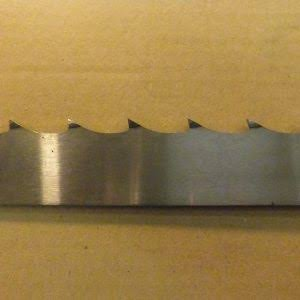
The Starrett Woodpecker Premium blade is engineered for fine resawing where precision and cut surface are critical. Its carefully ground teeth and tension-stable body deliver smooth cuts without chatter, making it ideal for producing glue-ready veneers.
We used this blade to slice 1/8” and ¼” veneers from 6” walnut and cherry boards.
The surface finish required no sanding, and the blade held tolerance within ±0.010” across the full length of every board. It also maintained kerf consistency without overheating, even on difficult-to-cut curly maple.
This blade is not optimized for general-purpose use or aggressive stock removal. Instead, it’s built for fine cabinetry, instrument backs, and veneered panel construction, where precision is non-negotiable.
If you need the cleanest cut surfaces possible from a bandsaw, this is the blade to use.
6. Rikon 6 TPI Carbon Blade – Best for Light-Duty and Entry-Level Work
Best For: Beginner woodworkers, casual projects, basic ripping
Use With: Pine, poplar, MDF, practice cuts
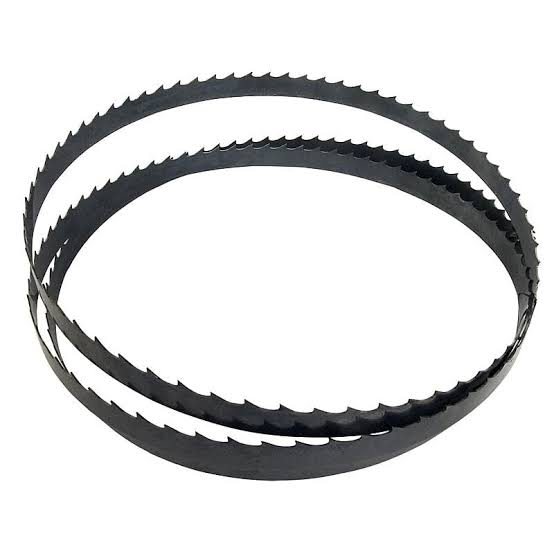
Rikon’s factory carbon steel blade — the same one bundled with their 10-324 and 10-326 saws — is also available standalone, and it’s honestly where most woodworkers should start.
During testing, this 6 TPI blade handled pine and poplar with reasonable accuracy for light-duty rips and gentle curves. Nothing flashy, but it gets the job done. Where it really earns its keep is as a learning tool. New users can practice blade drift compensation, fence alignment, and feed rate control without worrying about destroying an expensive blade. It’s forgiving — you can push too fast, angle slightly off, or forget to retension, and it keeps cutting without complaint.
The downside shows up past 1½” hardwood. It dulls fast and leaves a rougher surface that needs more cleanup. But that’s the trade-off for a blade you don’t have to babysit.
For hobby projects, DIY builds, or anyone still getting comfortable at the bandsaw, this is the most approachable blade we tested. Minimal tuning, minimal stress, minimal cost.
Bottom line: The best starter blade for beginners — cheap enough to learn on, capable enough to actually use.
7. AYAO ¾” x 3 TPI – Best New Heavy-Duty Blade Released in 2026
Best For: Aggressive hardwood ripping, slab breakdown, log milling
Use With: Oak, maple, hickory, exotic hardwoods
Best For: Aggressive hardwood ripping, slab breakdown, log milling
Use With: Oak, maple, hickory, exotic hardwoods
AYAO’s ¾” x 3 TPI is the most impressive new blade we tested in 2025, and it immediately replaced two mid-grade models from our previous list that failed under heavy use.
This is a high-carbon steel beast built for speed and stability. The aggressive tooth geometry rips fast with maximum kerf efficiency, while the wide body resists deflection in thick stock better than anything else in its class. We ripped and resawed 10″ maple and hickory — two woods that punish lesser blades — and the AYAO tracked straight even at high feed rates. No wandering, no binding, no sudden stalls.
Weld quality was notably clean with no heat discoloration or weak spots — a common failure point in heavy-duty blades that we didn’t see here.
If you’re resawing dense hardwoods daily, milling slabs, or breaking down thick stock and need both speed and reliability, this is the blade to beat. It outperformed blades costing significantly more and proved durable enough to earn a permanent spot in the rotation.
Bottom line: The best heavy-duty newcomer of 2025 — aggressive, stable, and built to survive the woods that destroy lesser blades.
Final Takeaway: Choose Based on Task and Material
Every bandsaw blade performs differently depending on what you’re cutting. Here’s how to decide:
- Best for Resawing Hardwood: Timber Wolf ½” or AYAO ¾”
- Best for Composite Panels: Lenox Diemaster 2
- Best for Tight Curves: Olson MVP 1/8”
- Best for Budget-Friendly Use: Supercut Flexback ⅜”
- Best for Veneers & Fine Cuts: Starrett Woodpecker Premium
- Best for Beginners: Rikon 6 TPI
- Best for Heavy Duty 2025 Pick: AYAO ¾”
For woodworkers who demand results, not marketing, this list is based on real testing, real materials, and real woodworking tasks—not generic product blurbs.
Let us know which blades you’ve used and what materials they’ve worked well for. We update this list every year to reflect what truly performs in the shop.
Bandsaw Blade Buying Guide: What to Know Before You Buy
Choosing the right bandsaw blade isn’t just about picking the top-rated option — it’s about matching the blade to your saw, your material, and the work you actually do. Here’s what matters.
Blade Width: The Hard Limit
Your bandsaw’s wheel diameter dictates the minimum blade width you can run. A 14″ saw typically handles ⅛” to ¾” blades; smaller 10″ or 9″ saws may not tension a ¾” blade properly. Check your manual — running too wide a blade strains bearings and tires, while too narrow a blade wanders in straight cuts. Match the width to the task: narrow for curves, wide for resawing.
TPI (Teeth Per Inch): The Cut Quality Trade-Off
- Low TPI (2–4): Aggressive, fast material removal. Best for thick stock resawing and ripping. Rougher surface finish.
- Medium TPI (6–8): General-purpose balance. Good for mixed ripping and light curves.
- High TPI (10–14+): Slower cuts, smoother finish. Essential for sheet goods, melamine, and detail work where tear-out matters.
A common mistake: using a fine-tooth blade for thick hardwood resawing. It overheats, loads with chips, and dulls prematurely. Use the coarsest TPI that still gives acceptable finish for your material thickness.
Tooth Style: Hook, Skip, or Regular
- Hook tooth: Aggressive forward rake. Cuts fast, clears chips well. Ideal for ripping and resawing thick stock.
- Skip tooth: Wider gullet, fewer teeth. Good for softer woods and resawing where chip clearance is critical.
- Regular tooth: Zero or slight rake. Smoother cut, less aggressive. Best for sheet goods, detail work, and materials prone to splintering.
Blade Material: What You’re Paying For
| Material | Best For | Lifespan | Cost |
|---|---|---|---|
| Carbon steel | Softwoods, general utility, beginners | Short | Low |
| Spring-tempered carbon | Hobby work, light-duty ripping | Moderate | Low-Mid |
| Silicon steel | Resawing, elastic tension reduction | Moderate-Long | Mid |
| Bi-metal (M42 teeth) | Abrasive materials, MDF, melamine, high-volume work | Long | Mid-High |
| Carbide-tipped | Extreme hardwoods, production resawing | Very Long | High |
Carbon steel dulls quickly in abrasive materials like MDF or particle board. Bi-metal blades cost more upfront but survive 5–10x longer in those applications. Don’t overspend on carbide if you’re cutting pine and poplar — but don’t cheap out on carbon steel for daily hardwood work.
Tension and Your Saw’s Limits
High-performance blades often demand high tension. Older saws, smaller saws, and machines with worn tires may not generate enough tension to stabilize a wide resaw blade — or may damage bearings trying. The Timber Wolf’s silicon steel is specifically designed to work around this; if your saw is marginal, prioritize blades engineered for lower tension.
Weld Quality: The Hidden Failure Point
On narrow blades especially, the weld is where blades die. A poor weld snaps under tension or kinks in tight turns. Precision-welded blades (like the Olson MVP) cost more but fail less — critical for scroll work where a snapped blade ruins the piece.
When to Buy Multiple Blades
One blade cannot do everything well. If your work spans resawing thick hardwoods, cutting sheet goods, and doing detail curves, plan for at least two blades: a wide hook-tooth blade for ripping/resawing and a narrow fine-tooth blade for curves and detail work. Swapping blades takes minutes; fighting the wrong blade for hours wastes time and material.
Price vs. Value
The cheapest blade isn’t the best value if it dulls in 20 feet and leaves surfaces that need extensive cleanup. Calculate cost per linear foot of usable cut, not just sticker price. For occasional hobby use, a budget blade like the Supercut Flexback makes sense. For daily production work, a bi-metal or premium blade pays for itself in reduced downtime and better cut quality.
Final Checklist Before Buying
- [ ] What is my saw’s maximum blade width and tension capacity?
- [ ] What material will I cut most often?
- [ ] Do I need smooth finish or fast material removal?
- [ ] Will I do curves, resawing, or both?
- [ ] Is this for occasional hobby use or daily production?
- [ ] Am I cutting abrasive materials that demand bi-metal or carbide?
Answer those honestly, and the right blade becomes obvious.
Frequently Asked Questions About Bandsaw Blades for Woodworking
What are the best bandsaw blades for woodworking in 2026?
The best bandsaw blades for woodworking depend on your specific projects. For resawing thick hardwoods, the Timber Wolf ½” x 3 TPI leads our list. For abrasive sheet materials like MDF and melamine, the Lenox Diemaster 2 bi-metal blade outperforms everything else. If you do intricate scroll work and template shaping, the Olson MVP 1/8″ is the top choice. Budget-conscious woodworkers should consider the Supercut Flexback for general utility ripping.
How do I choose the right bandsaw blade for my project?
Start by matching the blade width to your saw’s capacity and the cut type — narrow blades for curves, wide blades for resawing. Then select TPI based on material thickness: coarse teeth (2–4 TPI) for thick stock, fine teeth (10–14 TPI) for detail work and sheet goods. Finally, choose blade material based on what you cut most. Carbon steel works for softwoods and hobby use, while bi-metal or silicon steel is worth the investment for hardwoods and abrasive materials.
What TPI should I use for resawing hardwoods?
For resawing thick hardwoods, use a low TPI blade — typically 2 to 4 TPI. The coarse pitch clears chips efficiently and prevents the blade from overheating or binding in deep cuts. A hook tooth profile also helps with aggressive material removal. Our top pick for this application, the Timber Wolf ½” x 3 TPI, uses exactly this configuration.
Can I use one bandsaw blade for all my woodworking?
Technically yes, but you shouldn’t if you want quality results. One blade cannot resaw 10″ maple cleanly, cut melamine without chipping, and trace tight scroll patterns equally well. Most serious woodworkers keep at least two blades: a wide coarse blade for ripping and resawing, and a narrow fine-tooth blade for curves and detail work. Swapping blades takes minutes and dramatically improves cut quality.
Why do my bandsaw blades dull so quickly in MDF?
MDF and particle board are highly abrasive because they contain resin and compressed fibers that micro-fracture carbon steel teeth. Standard carbon steel blades often dull in under 10 sheets of MDF. For these materials, invest in a bi-metal blade like the Lenox Diemaster 2, which uses M42 high-speed steel teeth bonded to a flexible back. The harder tooth material resists abrasion far longer.
What is the difference between carbon steel and bi-metal bandsaw blades?
Carbon steel blades are affordable and flexible, making them good for general-purpose woodworking and beginners. However, they dull quickly in hardwoods and abrasive materials. Bi-metal blades combine M42 high-speed steel teeth with a spring-steel body. The teeth stay sharp much longer in demanding materials, while the flexible back reduces fatigue and breakage. Bi-metal blades cost more upfront but last significantly longer in production environments.
How wide should my bandsaw blade be?
Blade width depends on your saw’s wheel size and the cut you’re making. For tight curves and scroll work, use narrow blades — ⅛” to ¼” wide. For general ripping and moderate curves, ½” blades work well. For resawing thick stock, use the widest blade your saw can tension properly — typically ½” to ¾” on 14″ or larger saws. Never run a blade wider than your saw’s specifications recommend.
How often should I change my bandsaw blade?
Change your blade when cuts require noticeably more feed pressure, when the blade starts to drift or wander, or when cut quality degrades beyond acceptable cleanup. For hobbyists, this might mean once a year. For daily users resawing hardwoods, it could mean every few weeks. Track your linear feet of cutting if you want a more precise metric — most quality blades show degradation after 20–40 feet of demanding work.
What causes bandsaw blades to break?
Common causes include excessive tension, improper tracking, feeding too aggressively, cutting radius tighter than the blade width allows, and poor weld quality on narrow blades. Dull blades also break more often because you push harder, overloading the teeth and back. Always ensure proper tension for your blade width and let the blade cut at its own pace.
Are expensive bandsaw blades worth it for hobbyists?
Not always. If you cut pine, poplar, and occasional plywood a few times per month, a budget-friendly carbon steel blade like the Supercut Flexback or Rikon factory blade delivers excellent value. Expensive bi-metal or silicon steel blades only pay off when you’re cutting abrasive materials daily or resawing thick hardwoods regularly. Match the blade investment to your actual usage.
What is the best bandsaw blade for beginners?
The Rikon 6 TPI Carbon Blade is our top recommendation for beginners. It’s forgiving with feed rate variations, doesn’t require constant retensioning, and performs adequately in pine, poplar, and MDF. Most importantly, it’s inexpensive enough that mistakes — learning blade drift compensation, fence alignment, and proper tension — won’t cost you much when you need a replacement.
Can I resaw veneer with a standard bandsaw blade?
You can, but results will be poor. Standard blades lack the stability, tooth geometry, and material quality needed for consistent veneer thickness. For resawing veneers, use a dedicated resaw blade like the Timber Wolf ½” x 3 TPI. It maintains straight tracking and smooth surfaces even at thin dimensions, reducing the need for planing or heavy sanding before glue-up.
What maintenance do bandsaw blades need?
Keep blades clean — pitch and resin buildup increase friction and heat. A blade cleaner or simple mineral spirits wipe helps. Ensure proper tension before each use; loose blades wander and break. Check tracking alignment regularly. When storing blades, coil them properly or hang them to prevent kinks. Never leave a tensioned blade on the saw for extended periods, as this fatigues the back.
How do I prevent burn marks when using bandsaw blades for woodworking?
Burn marks usually mean the blade is dull, the feed rate is too slow, or chip clearance is inadequate. Use a sharp blade with appropriate TPI for your material thickness. Don’t force the cut — let the blade do the work. For dense hardwoods, a hook tooth blade with aggressive gullet design (like the Timber Wolf 3 TPI) clears chips efficiently and reduces burning in deep cuts.